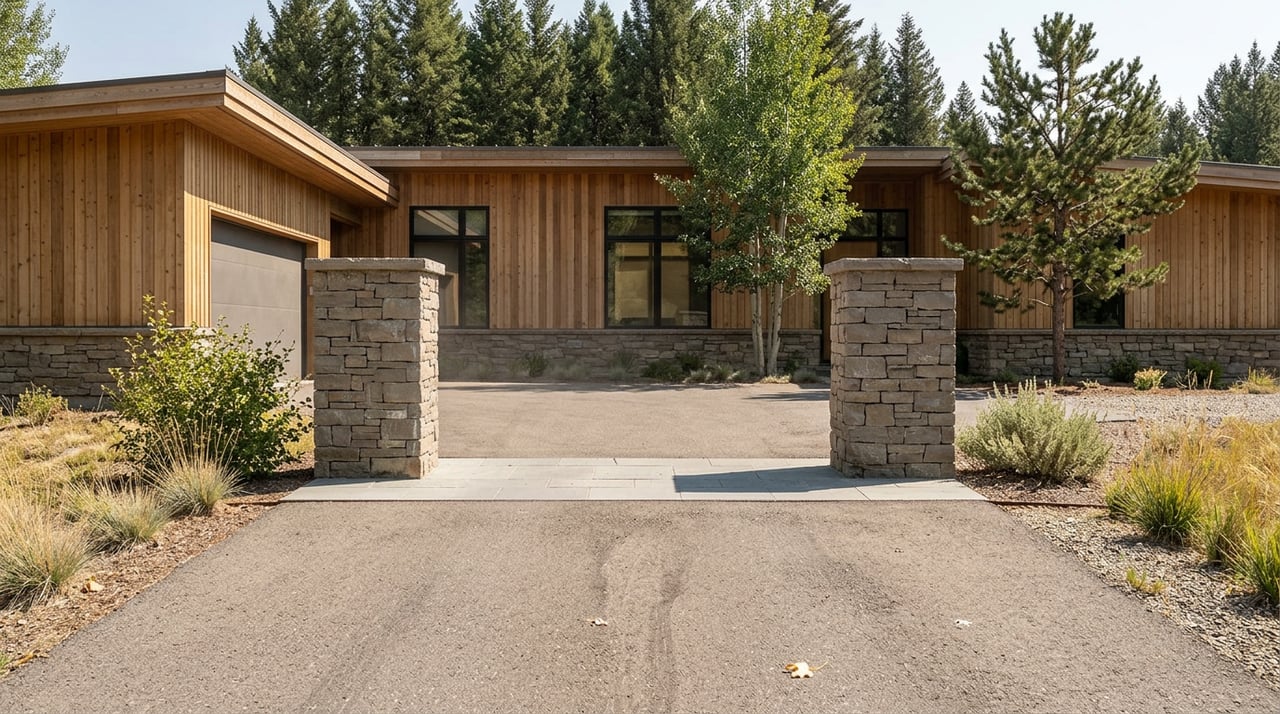
Promontory Club Golf Membership Deposit Increase: What Buyers Should Know
Peak Luxury Real Estate Editorial Team August 27, 2026
Peak Luxury Real Estate Editorial Team August 27, 2026
What happens to a Promontory listing that already carries a golf membership, once a new one costs $200,000 more to obtain?
That question is about to get an answer. Beginning September 15, 2026, the deposit for a newly issued Promontory Full Golf Membership rises from $300,000 to $500,000. Anyone hoping to lock in the current terms has to have their property purchase closed and funded, and their membership application submitted, approved, and funded, by 5:00 p.m. on September 14. Miss that window and the math changes for good.
Most of what's been written about this deadline treats it as a straightforward price increase. It isn't. The more useful way to read it is as a repricing of a private contractual right that happens to be harder to obtain than the real estate it's attached to. Full Golf memberships at Promontory have been sold out with a waitlist for some time. Buying a home has never guaranteed access to the club. So the deadline doesn't just make new memberships more expensive. It makes existing, transferable memberships attached to resale homes meaningfully more valuable, in a way that won't show up cleanly in comparable sales for months.
The deadline sounds simple until you look at what it actually requires. Three separate things have to happen, and only one of them is the closing:
Escrow can close on schedule and a buyer can still miss the current terms if the membership application isn't approved in time. Club approval isn't instantaneous, and buyers who assume "close by September 14" is the whole requirement are the ones most likely to find themselves on the wrong side of the $200,000 gap. Anyone who has already decided Promontory is the right community should be building membership approval time into their contract timeline now, not after an offer is accepted.
This isn't Promontory's first increase, and the pattern is worth sitting with. When The Hills, Promontory's third golf course, opened its clubhouse in early 2024, the Full Membership deposit stood at $250,000. It has since moved to $300,000, and now jumps to $500,000. That's a doubling in roughly two and a half years, and it tracks the community's build-out far more closely than it tracks home prices.
Promontory now sits at approximately 75 percent sold, with more than 1,400 lots already spoken for. Promontory's own 2026 announcement of new amenities and expansion plans counts 1,924 total homesites, about 965 completed homes, and roughly 1,139 members across the club. As inventory shrinks and the amenity base matures, the price of entry has moved in lockstep. A new Spa at Promontory, a renovated Village Clubhouse, and a new design center for custom homebuilding through the in-house Promontory HOMES program all landed in the past year. The deposit increase reads less like a surprise and more like the club charging what its finished infrastructure now costs to join.
The September 15 change also moves Promontory into a different bracket relative to the clubs buyers typically compare it against.
Club | Full Membership Deposit | Family / Multigenerational Privileges |
|---|---|---|
Promontory (through Sept. 14, 2026) | $300,000 | Existing members retain current terms |
Promontory (Sept. 15, 2026 onward) | $500,000 | Limited primarily to the purchasing couple and qualifying children for new memberships |
Marcella Club | $500,000 | Vertical privileges not offered |
Tuhaye (Talisker Club) | $200,000 initiation, bundled into developer pricing | Lower deposit, broader family structure by comparison |
Promontory isn't just raising a number. It's converging on the structure Marcella Club already uses, where a $500,000 deposit comes without multigenerational carryover. Meanwhile Tuhaye and Red Ledges continue to offer lower deposits and, by comparison, more generous family access. For a buyer weighing three or four clubs at once, that gap now matters more than it did before the September change was announced.
Here's the part that changes how a Promontory listing should be evaluated. A resale home with a transferable Full Golf membership attached at the old $300,000 deposit and the old family privilege structure is now offering something that literally cannot be recreated by any buyer who closes after September 14. That's not a comp adjustment. It's a feature that expires.
Two identical homes in the same neighborhood, one with an attached membership and one without, have never traded at identical values. That gap is about to widen, because the replacement cost of the missing membership just went up by $200,000 and lost some of its family flexibility. In the first quarter of 2026, Promontory produced 22 sales totaling $128.3 million, with a median price of $4.8 million, up 31 percent year over year, according to the Park City Board of Realtors' quarterly statistics. Those numbers describe a community already tightening months before the deposit news broke. The membership deadline adds a second, separate driver of value on top of it, one that has nothing to do with square footage, lot size, or view corridor.
A listing that already carries a transferable Full Golf membership has a selling point with a shelf life. Pricing it purely off recent Promontory comps understates it, because most of those comps closed before the market understood what September 15 would mean. The more accurate frame is: what would it cost a buyer to assemble the same package today, a comparable home plus a new membership at $500,000 with restricted family privileges? That gap belongs in the listing conversation, not as a footnote but as the lead argument.
Sellers should also confirm, in writing, exactly what membership terms transfer with their specific property. Promontory separates HOA obligations from club membership, and not every home in the community carries an attached membership at all. Knowing precisely what you're offering, and being able to document it, is worth more in the next few weeks than at almost any other point in the community's history.
Anyone who has already settled on Promontory should treat the next three weeks as a sequencing problem, not a race. The property still has to be the right property. But once that decision is made, the closing timeline and the membership application timeline need to run in parallel from day one, with enough buffer for club approval to land before the September 14 cutoff. Waiting until an offer is accepted to start the membership conversation is the most common way this deadline gets missed.
Does the deposit increase affect people who already hold a Promontory membership? No. Existing members retain their current terms. The change applies to newly issued Full Memberships, whether purchased through a resale transfer or through qualifying developer inventory.
If I'm still deciding between Promontory and another club, should I rush? Not on the deposit alone. The right property, budget, and lifestyle fit still matter more than beating a deadline. The deadline is most relevant to buyers who have already concluded Promontory is their community.
Does the September 15 change apply to resale membership transfers as well as new-issue memberships? Yes. The requirement is that the qualifying property purchase closes and funds, and the membership application is submitted, approved, and funded, before 5:00 p.m. on September 14, regardless of whether the membership is transferring with a resale home or being newly issued through developer inventory.
Promontory's next few weeks will be defined less by what homes are for sale and more by which of them still carry the old terms. If you're weighing a purchase or a sale inside that window, Peak Luxury Real Estate can walk through what a specific property's membership status actually means before you write an offer. Contact us.
This article is general information, not legal, tax or financial advice. Consult a qualified professional about your situation.
Stay up to date on the latest real estate trends.



Navigate Park City’s luxury real estate market with confidence, from Deer Valley ski-in/ski-out estates to Jordanelle retreats—backed by tailored strategy, elevated service, and local expertise.